West Bengal Chief Minister Suvendu Adhikari has publicly defended the remarks of a visiting religious preacher who urged Hindus in the state to avoid non-vegetarian food near Durga Puja idols. Speaking in the state Assembly, Adhikari also directed the Kolkata Police Commissioner to arrest those who burnt photographs of the preacher outside Bhawanipore police station. The episode has intensified an ongoing debate over tradition, dietary practices and the boundaries of religious advice during one of Bengal’s most important festivals.
The Preacher’s Appeal and the Immediate Backlash
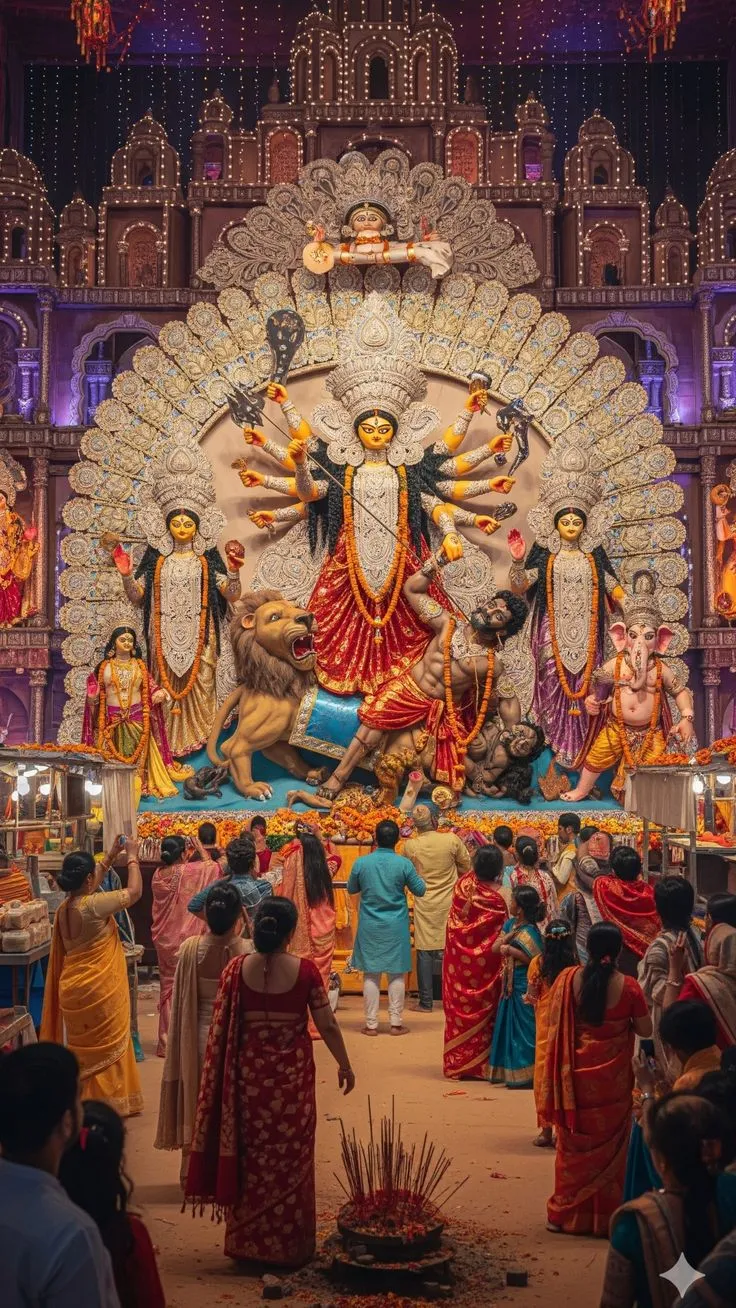
Dhirendra Krishna Shastri, popularly known as Bageshwar Baba and the chief priest of Bageshwar Dham in Madhya Pradesh, made the comments during a recent visit to West Bengal. Addressing devotees, he appealed to Hindus in the state not to sell non-vegetarian food near Durga idols during Navratri and the Puja period. He framed the suggestion as a matter of maintaining sanctity around the goddess, even for those who might not install idols themselves.
The remarks quickly triggered strong reactions. In Bengal, Durga Puja is deeply intertwined with local cultural practices that include the offering and consumption of fish and meat in many households and community celebrations. Non-vegetarian food, particularly on certain days of the festival, forms part of long-standing Shakta traditions in the region. Critics viewed the appeal as an attempt to impose an external dietary standard on a festival rooted in Bengali customs.
Protests followed. Congress supporters gathered outside Bhawanipore police station, where a complaint had been lodged against the preacher, and burnt his photographs. The visual of the burning images became a focal point of political and public discussion.
Chief Minister’s Defence in the Assembly
Responding in the West Bengal Legislative Assembly on September 10, Chief Minister Suvendu Adhikari sought to contextualise the preacher’s statements. He described Shastri as a saint who had spoken on themes of nationalism, culture and Akhand Bharat during his visit to Liluah. Adhikari emphasised that the views were expressed as personal or spiritual advice rather than an imposition.
“Those who want to accept will accept, and those who do not want will not. He did not impose it on anyone,” the Chief Minister said. He then turned to the protests, stating that he had seen people burning the preacher’s photographs outside the police station and was directing the Commissioner of Police from the floor of the House to ensure those involved were arrested.
Adhikari’s intervention linked two issues: the right of a religious figure to express an opinion, and the limits of public protest when it involves the destruction of images. By ordering arrests, the government signalled that it viewed the burning of photographs as an unacceptable form of dissent.
Political and Cultural Context
The controversy did not arise in isolation. Shastri’s visit had been facilitated and publicly welcomed by the state government. The Chief Minister and several cabinet colleagues had met him and hosted him for dinner. Adhikari had also encouraged the establishment of a Bageshwar Dham centre in West Bengal, framing it as part of efforts to protect cultural and spiritual traditions.
At the same time, other voices within the ruling Bharatiya Janata Party in Bengal moved to distance the party from any perception of dietary enforcement. State BJP leaders publicly affirmed that Bengalis would continue to eat fish and meat during Durga Puja according to their traditions. They cited historical and cultural references, including statements attributed to Swami Vivekananda, to underline that local practices could not be dictated by visiting preachers.
Opposition parties, including the Trinamool Congress and Congress, criticised both the preacher’s remarks and the government’s association with him. They argued that the episode reflected an attempt to alter Bengal’s cultural ethos under the new administration.
Tradition Versus Uniformity in Festival Practices
Durga Puja in West Bengal has long accommodated a range of practices. While some households and committees observe vegetarian norms, many others include non-vegetarian offerings and meals as an integral part of the celebration. Goat sacrifice and the subsequent consumption of meat as prasad remain part of certain traditional rituals in the Shakta tradition. Fish, especially hilsa, also holds a prominent place in festive meals.
The preacher’s appeal touched a sensitive nerve because it appeared to challenge this diversity. For many Bengalis, the festival is as much a cultural and social event as a religious one, and food practices are seen as expressions of regional identity rather than matters for external prescription.
The government’s dual response—defending the right to express the view while ordering action against those who burnt photographs—illustrates the tightrope it is walking. On one hand, it seeks to accommodate and even promote certain spiritual voices. On the other, it must navigate the strong attachment of Bengalis to their established festival customs.
Law, Order and the Limits of Protest
Adhikari’s direction to the police raises questions about the handling of public dissent. Burning photographs is a form of symbolic protest that has been used across the political spectrum in India. The decision to treat it as an arrestable offence in this instance signals a low tolerance for actions perceived as insulting to religious figures associated with the ruling establishment.
The complaint against the preacher and the subsequent protest outside the police station had already placed the issue in a legal and political frame. By intervening from the Assembly, the Chief Minister elevated the matter to a question of state authority and public order.
Broader Implications for the Festival Season
With Durga Puja approaching, the episode adds a layer of political tension to the preparations. Puja organisers, vendors and ordinary citizens are watching closely to see whether the controversy translates into any practical restrictions or remains confined to rhetorical exchanges. So far, the state government has not announced any formal ban on non-vegetarian food near pandals, and several BJP leaders have explicitly rejected the idea of imposing such rules.
The debate ultimately turns on the balance between individual religious expression, collective cultural practice, and the role of political leadership in mediating between the two. Adhikari’s defence of the preacher and his simultaneous order for arrests frame the government’s position: spiritual advice is permissible, but public destruction of images will not be tolerated.
As the festival draws nearer, the test will be whether the discussion remains one of competing views or escalates into deeper cultural and political confrontation. For now, the Chief Minister has drawn a clear line—protecting the space for the preacher’s message while signalling firm action against those who crossed into the burning of photographs.
Read more – simplemarathiukhane.com