The Centre has informed Parliament that new NCERT textbooks for Classes 1 to 8 now incorporate references to the history, culture, traditions, art, heritage and contributions of the North-Eastern States. The disclosure was made in the Rajya Sabha as part of the government’s response on efforts to reflect the region’s diversity in the national school curriculum.
Parliamentary Reply on Curriculum Inclusion
Minister of State for Education Jayant Chaudhary provided the information in a written reply to a question raised by Rajya Sabha MP Birendra Prasad Baishya. The member had asked whether the government was considering the inclusion of the history, culture and heritage of the North-Eastern States in the NCERT curriculum so that students across the country could gain a more comprehensive understanding of the region.
In response, the Ministry of Education stated that NCERT has already developed new textbooks that include such references, particularly for students in Classes 1 to 8. The objective, according to the reply, is to promote awareness of the region’s rich cultural diversity among learners nationwide.
Alignment with NEP 2020 and NCF-SE 2023
The inclusion has been placed firmly within the framework of the National Education Policy 2020 and the National Curriculum Framework for School Education 2023. Both documents emphasise inclusive and equitable quality education, respect for diversity, and attention to local context in curriculum, pedagogy and policy. They also stress the integration of Indian Knowledge Systems and cultural rootedness.
Officials noted that NCERT had conducted district-level consultations across States and Union Territories, including the North-Eastern States, as part of the follow-up on NEP 2020 implementation. State focus groups prepared position papers that contributed to the development of the National Curriculum Frameworks. These processes, the government indicated, helped ensure that regional perspectives informed the new learning materials.
Multilingual Materials Reflecting Regional Culture
Beyond the core subject textbooks, NCERT has expanded language-learning resources. The Council has brought out Grade 6 R3 Language textbooks and Grade 9 age-appropriate learning material in 22 languages. Among these are Assamese, Bodo and Manipuri, languages that carry the cultural expressions of the North-Eastern States. By making such materials available, the curriculum effort seeks to give linguistic and cultural recognition to communities whose mother tongues form an integral part of India’s diversity.
This multilingual dimension aligns with the broader NEP vision of education that is rooted in local languages and contexts while remaining connected to a shared national framework.
Capacity Building and Expert Representation
The Ministry further stated that NCERT has been conducting capacity-building programmes across States and Union Territories, including those in the North-East. These programmes aim to promote awareness of cultural rootedness, Indian Knowledge Systems, and the curricular perspective set out in NEP 2020 and NCF-SE 2023. Teachers and education functionaries are being oriented to the new approach so that classroom practice can reflect the intended emphasis on diversity and local knowledge.
In addition, the National Syllabus and Teaching-Learning Material Committee and the Curricular Area Groups include representation from experts and scholars, including NCERT faculty members, drawn from the North-Eastern States. This institutional presence is intended to ensure that the region’s perspectives continue to inform ongoing curriculum development.
Addressing Long-Standing Concerns
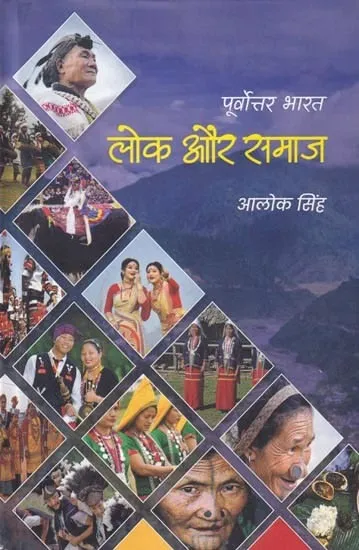
For many years, educators, civil society groups and representatives from the North-East have pointed to the limited visibility of the region’s history, societies and cultural contributions in mainstream national textbooks. Critics argued that the absence or marginal treatment of North-Eastern narratives left students in other parts of the country with an incomplete picture of India and could leave students from the region feeling underrepresented in the national story.
The government’s parliamentary reply presents the new textbooks as a concrete step toward correcting that imbalance at the foundational and middle stages of schooling. By embedding references to history, traditions, art and heritage from the North-Eastern States into materials used by Classes 1 to 8, the curriculum aims to normalise knowledge of the region rather than treat it as an optional or peripheral topic.
What the Inclusion Seeks to Achieve
At the primary and upper-primary levels, textbooks shape early understandings of the nation, its peoples and its past. Introducing North-Eastern content at these stages is expected to help children across India recognise the region’s distinct yet integral place within the larger national fabric. Stories of local traditions, artistic forms, historical developments and contemporary contributions can foster both familiarity and respect.
For students in the North-Eastern States themselves, seeing their cultures and histories reflected in national textbooks can strengthen a sense of belonging and validation. For students elsewhere, the material offers an opportunity to move beyond stereotypes and develop a more nuanced appreciation of the country’s diversity.
Implementation and the Road Ahead
The development of new textbooks is only the first stage. Effective classroom use will depend on teacher preparation, the availability of supporting materials, and the extent to which schools integrate the new content into regular teaching rather than treating it as an add-on. The capacity-building programmes mentioned by the Ministry are therefore a necessary accompanying measure.
Curriculum reform is an iterative process. As feedback emerges from teachers, students and state education departments, further refinements may be required to deepen coverage, improve pedagogical approaches and ensure accuracy and sensitivity in representation. The presence of North-Eastern experts on key committees provides a channel for such continuous improvement.
A Step Toward More Inclusive National Education
The Centre’s statement in the Rajya Sabha signals that the inclusion of North-Eastern history, culture and heritage in NCERT textbooks for Classes 1 to 8 is no longer merely an aspiration but an operational feature of the new curriculum materials. Anchored in NEP 2020 and NCF-SE 2023, supported by multilingual resources and backed by consultation and capacity-building efforts, the move seeks to give the region a clearer and more consistent place in the learning experience of children across India.
Whether this textual inclusion translates into lasting awareness and mutual understanding will depend on how thoroughly the content is taught, discussed and connected to students’ wider sense of the nation. For now, the parliamentary reply establishes that the curriculum framework has formally opened space for the North-East’s stories to be told alongside those of other regions—an important marker in the ongoing effort to make school education more reflective of India’s full diversity.
Read more – laicaicai.com