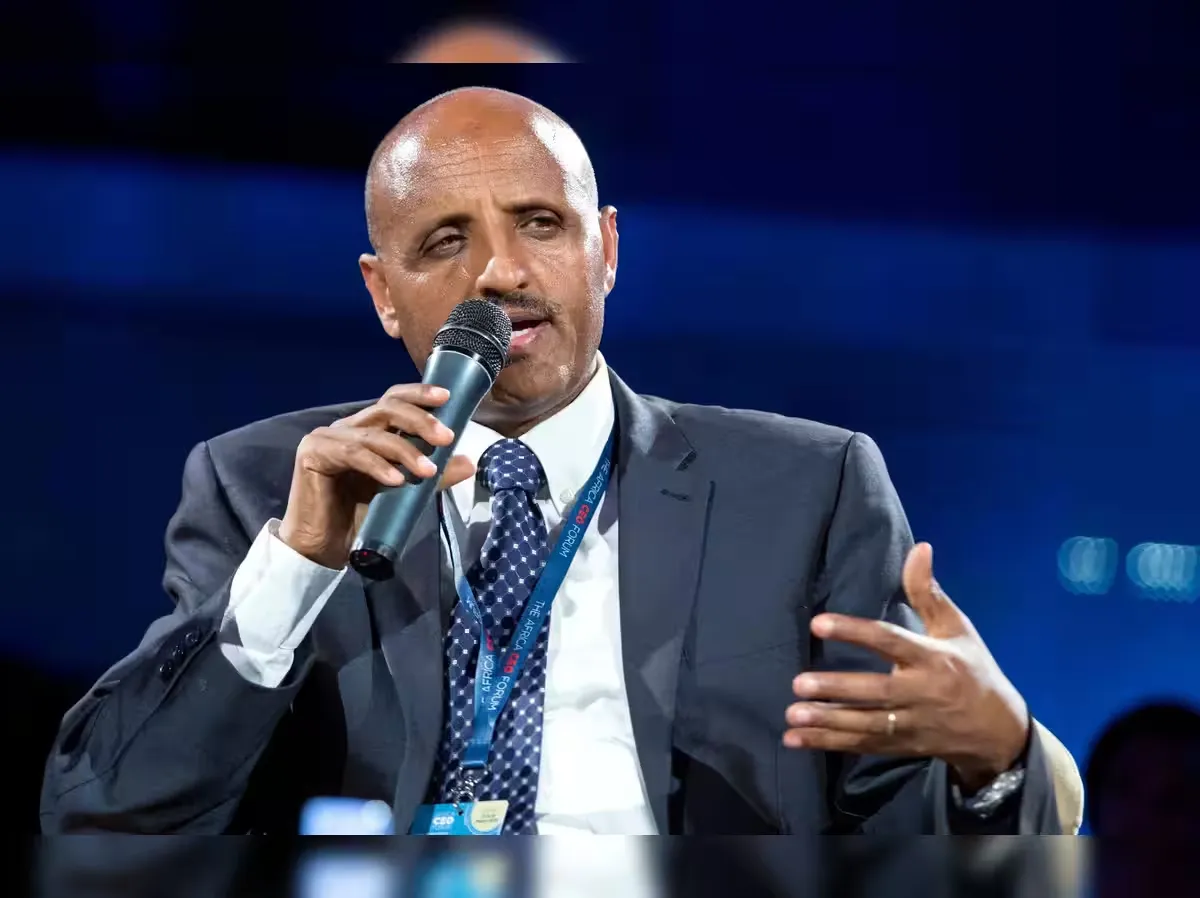
Air India has entered a new phase of leadership with a clear message from the top: safety must come before everything else. At a townhall meeting on Monday, incoming chief executive Tewolde Gebremariam and Tata Sons Chairman N Chandrasekaran jointly identified safety as the airline’s foremost priority. Gebremariam, who is preparing to take full charge, also called on employees to help “make Air India great again,” drawing on a well-known American political slogan to signal ambition and renewal. The session, which also included outgoing CEO and managing director Campbell Wilson, marked an important moment of transition for the Tata Group-owned carrier.
A Leadership Transition with Clear Priorities
Gebremariam, the former group CEO of Ethiopian Airlines, was appointed as Air India’s next CEO and managing director earlier this year. He is expected to assume the role formally once government security clearance is completed, a process anticipated within weeks. Until then, he has already begun engaging with the organisation. His first major address to staff underlined a practical and cultural shift. “A safety-first culture has to be our number one priority. It is not enough to say it. We must live it every day,” he told employees. He stressed that every staff member should feel empowered to raise concerns and stop operations if something appears unsafe, promising full support for such a culture.
Chandrasekaran reinforced the same theme with equal emphasis. He stated that Air India’s safety record should not merely match the best airlines in the world but should aim to be better than the best. Safety, he said, is not a slogan but a daily practice that requires world-class processes, rigorous compliance, and personal accountability at every level. The chairman also highlighted the need to rebuild passenger trust, improve operational consistency, and maintain tighter cost discipline after a difficult period for the airline.
Context of Recent Challenges
The focus on safety comes against the backdrop of heightened public and regulatory scrutiny. Air India has faced significant operational and safety-related pressures in the recent past, including a major accident that claimed numerous lives and subsequent incidents that raised questions about procedures and reliability. These events have affected passenger confidence and added to the complexity of the airline’s ongoing transformation. Chandrasekaran acknowledged that the past eighteen months had been particularly turbulent, citing geopolitical disruptions, airspace issues, fuel volatility, and the impact of the accident among the factors that complicated the recovery path.
Financial performance has also been under strain. The airline and its low-cost subsidiary reported substantial combined losses in the most recent financial year, more than double the previous year’s figure. Against this background, the leadership has identified cost consciousness as another essential pillar alongside safety and customer trust. The message is that operational excellence and financial discipline must advance together if the airline is to achieve sustainable growth.
Gebremariam’s Vision and Experience
Gebremariam brings nearly four decades of aviation experience, including more than a decade at the helm of Ethiopian Airlines. Under his leadership, the African carrier expanded its network, grew its fleet significantly, and established Addis Ababa as a major international hub while maintaining a strong emphasis on safety and operational reliability. He has described Air India as a brand with a proud historic legacy and an opportunity to become a world-class global airline reflecting India’s economic potential.
In his townhall remarks, he linked safety directly to everyday operational standards. On-time performance, baggage handling, aircraft cleanliness, and professional management of disruptions were presented as the practical foundations of customer experience. He argued that excellence in these areas would naturally follow from a culture that prioritises getting the basics right without compromise. By inviting employees to take ownership of safety, he sought to move the organisation beyond top-down directives toward shared responsibility.
Chandrasekaran’s Broader Directive
As chairman, Chandrasekaran framed the next phase of Air India’s journey around four interconnected priorities: safety, customer trust, operational execution, and cost discipline. He thanked Campbell Wilson for guiding the airline through a complex period of stabilisation, integration, and fleet commitments after the Tata Group’s return to ownership. With those foundations in place, the focus now shifts to consistent delivery and higher standards.
Chandrasekaran’s call for a safety record superior to global benchmarks sets an ambitious target. It signals that incremental improvement will not be considered sufficient. The airline is expected to embed safety into decision-making at every level, from engineering and maintenance to flight operations and ground handling. At the same time, the chairman emphasised the importance of faster decision-making and greater consistency in the passenger experience as the operating environment continues to evolve.
Building a Culture of Accountability
Both leaders stressed that cultural change will be as important as procedural upgrades. Gebremariam’s invitation to employees to stop work if safety is compromised aims to create an environment in which raising concerns is not only permitted but expected. Such empowerment is widely regarded in aviation as a critical element of effective safety management systems. When staff feel supported rather than penalised for speaking up, latent risks are more likely to surface before they escalate.
The transition also occurs as Chandrasekaran approaches the end of his current term as Tata Sons chairman. His continued involvement in setting the tone for Air India underscores the group’s commitment to the airline’s long-term success. The combination of experienced leadership at the board level and a new chief executive with a proven record of large-scale airline transformation provides continuity of purpose during the handover.
Looking Ahead
Air India’s next chapter will be judged by its ability to translate these stated priorities into measurable outcomes. Passengers will look for visible improvements in reliability and confidence. Regulators will monitor compliance and safety performance closely. Employees will test whether the promised culture of openness and support materialises in daily operations. Investors and the parent group will watch financial discipline and the path toward sustainable profitability.
Gebremariam’s call to “make Air India great again” captures both nostalgia for the airline’s earlier stature and determination to restore it on contemporary terms. Achieving that ambition will require more than slogans. It will depend on consistent execution of a safety-first philosophy, operational reliability, and careful stewardship of resources. The townhall remarks by the incoming CEO and the chairman have set a clear direction. The coming months will show how effectively that direction is followed across the organisation.
For an airline with a long history and national significance, the renewed emphasis on safety represents both a response to recent challenges and a foundation for future credibility. Under the combined guidance of Gebremariam and Chandrasekaran, Air India has signalled that excellence in safety is not negotiable. That stance, if sustained, could become the defining feature of its next phase of development.
Read more – Thepowerfuldua.com , yandex-games.org