Seasonal style is more than swapping clothes when the calendar turns. It is about reading temperature, light, humidity, and daily routines so that every outfit feels intentional, comfortable, and polished. Mastering these shifts prevents the common frustration of a closet full of options that somehow never quite work. The most effective approach combines smart fabric choices, strategic layering, thoughtful color transitions, and a core of versatile pieces that move fluidly from one season to the next.
Why Seasonal Dressing Matters
Weather is rarely static. Mornings can start cool and afternoons turn warm; indoor air conditioning can feel freezing on a hot day; sudden rain or wind can change everything within hours. Clothing that ignores these realities leaves people either overheating, shivering, or constantly adjusting. Proper seasonal dressing regulates body temperature, supports confidence, and reduces decision fatigue. It also encourages longer use of existing garments rather than constant replacement, making style both more sustainable and more personal.
The foundation rests on three principles: match fabric weight and breathability to conditions, use layers that can be added or removed without breaking the look, and let color and texture reflect the season’s natural light and mood while remaining wearable in real life.
Fabrics and Color Principles Across the Year
Fabric performance drives comfort. In warmer months, natural fibers such as cotton, linen, and lightweight silk allow airflow and wick moisture. Linen in particular offers superior breathability. In cooler months, wool, cashmere, merino, flannel, and heavier knits provide insulation while still allowing some temperature regulation. Synthetic materials can trap heat and moisture, so they work best in performance outer layers rather than next-to-skin pieces.
Color follows the environment and available light. Spring and summer favor lighter, fresher tones—soft whites, creams, pastels, and clear accents—that reflect heat and feel airy. Autumn and winter shift toward deeper, richer hues: earthy browns, olives, burgundies, charcoals, and navy. Neutrals remain useful year-round; the key is adjusting their depth. Cream and beige dominate warmer months, while cool browns, charcoal, and black become more prominent as temperatures drop.
Spring: Lightweight Layers for Unpredictable Days
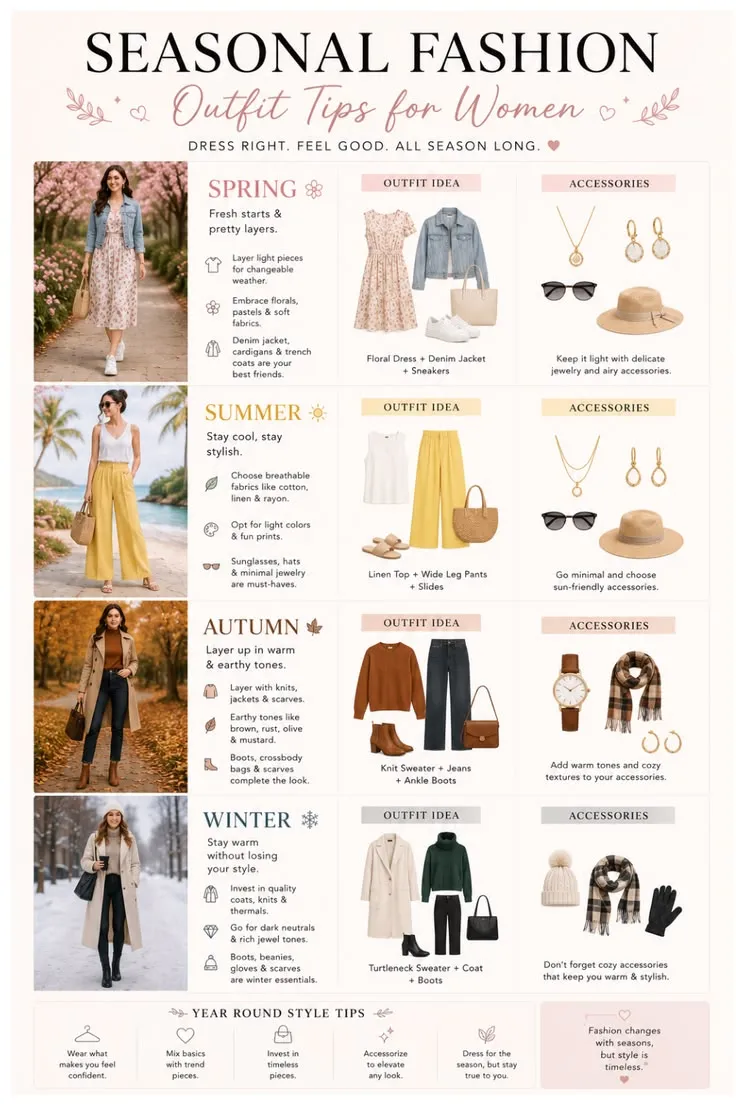
Spring weather is transitional by nature—cool mornings, mild afternoons, possible showers, and evenings that cool quickly. The goal is flexibility without bulk.
Start with mid-weight, breathable bases such as cotton shirts, lightweight knits, or soft blouses. Add removable layers: denim jackets, light bombers or coach jackets, unstructured blazers, cardigans, and classic trench coats. These pieces provide warmth when needed and can be carried or tied when the day warms. Overshirts and midweight crewnecks also bridge temperatures effectively.
Swap heavy winter coats and thick knits for lighter versions of similar silhouettes. Introduce soft color through pastels, sage, soft blues, or warm neutrals in accessories, tops, or outer layers. Footwear moves toward lighter options or versatile closed-toe styles that handle damp conditions. The overall effect should feel fresh and adaptable rather than strictly warm or cool.
Summer: Breathability and Effortless Structure
Summer demands moisture management and airflow while still maintaining a polished silhouette. Prioritize natural, open-weave fabrics—linen, cotton, lightweight silk, and bamboo blends. These materials keep the body cooler than synthetics.
Choose lighter colors that reflect rather than absorb heat. Silhouettes benefit from strategic volume: fitted through the torso with looser legs or skirts, or structured yet unlined jackets worn open. Minimal layering works best—an open short-sleeve button-down over a tank, a lightweight shirt jacket for air-conditioned spaces, or a fine-knit cardigan for cooler evenings.
Avoid heavy linings and overly structured pieces that trap heat. Footwear stays open or light. The result is clothing that feels intentional rather than sparse, allowing movement and comfort through heat and humidity.
Fall: Texture, Depth, and Balanced Layering
As temperatures cool and evenings shorten, fall invites richer textures and deeper colors without immediate bulk. Transition by keeping lighter summer pieces in rotation and adding mid-weight layers: flannel shirts, shackets, cardigans, fine-gauge sweaters, denim jackets, and light wool or utility jackets.
Incorporate fabrics such as corduroy, brushed cotton, light wool, and leather for tactile interest. Colors deepen into rust, olive, burgundy, chocolate, and navy while still allowing lighter neutrals for balance. Boots replace summer sandals, and scarves or vests add adjustable warmth.
A practical approach is building outward from a clean base—tee, shirt, or dress—then adding one structured layer that can open or close. This system handles days that start mild and end crisp. Darker neutrals gradually take precedence as the season progresses.
Winter: Warmth Without Sacrificing Silhouette
Winter requires insulation and protection while preserving clean lines. Effective dressing uses a layered system: a moisture-wicking base closest to the skin, an insulating mid-layer such as merino or cashmere knits or turtlenecks, and a protective outer coat or jacket.
Heavier wool, cashmere blends, flannel, and lined garments provide warmth. Longer coats and structured outerwear create polish. Accessories—scarves, gloves, hats, and boots—complete both function and style. Darker, richer tones dominate, though texture and subtle pattern prevent looks from feeling flat.
Summer pieces can still appear with the right additions: a lightweight dress layered under a sweater and coat, or silk pieces paired with knits and leather for contrast. The emphasis remains on warmth that does not overwhelm the body or the outfit’s shape.
Mastering Transitional Periods and Building Longevity
The periods between seasons are often the most challenging. The solution is never a full closet overhaul. Instead, keep core pieces accessible and introduce a few adaptable layers or footwear changes. A blazer, cardigan, trench, or denim jacket can transform a summer base into a cooler-weather look. Conversely, lighter outer layers replace heavy winter coats as spring arrives.
A capsule approach strengthens every season. Invest in well-fitting neutrals—white or light shirts, dark jeans or trousers, classic blazers, versatile knits, and quality outerwear—that mix across months. Seasonal accents then provide freshness without requiring entirely new wardrobes. Quality fabrics and proper fit extend the life of each garment and improve how clothing performs in changing conditions.
Observe actual local weather patterns rather than relying solely on the calendar. Climate variability means multi-season versatility has become increasingly practical. Pieces that work in overlapping temperature ranges reduce waste and simplify daily choices.
Putting It All Together
Dressing well across seasons is a skill built on observation and intention. Match fabric to temperature and humidity, build flexible layering systems, shift color depth with the light, and maintain a core of adaptable staples. Spring rewards light, removable layers and fresh tones. Summer prioritizes breathability and structure without weight. Fall introduces texture and richer hues through balanced mid-weight pieces. Winter focuses on smart insulation that preserves silhouette.
When these principles guide choices, getting dressed becomes more confident and less reactive. Outfits feel appropriate to the moment, support comfort throughout the day, and express personal style consistently—regardless of what the season brings.
Read more – GadgetsMonk.com