Suicide prevention in Adivasi communities requires a fundamental shift in approach. When people are uprooted from their language, culture and communities, distress can deepen in ways that clinical care alone may not fully address. Effective responses must therefore draw on the collective strengths, knowledge systems and social practices that already exist within Adivasi societies rather than relying solely on external medical models.
The Limits of Individual-Focused Care
Conventional mental health frameworks often treat suicide risk as an individual psychological problem. While clinical support remains important, this lens can miss the broader social and cultural forces shaping distress. In many Adivasi settings, emotional suffering is expressed through local idioms, bodily complaints, silence, irritability, social withdrawal or changes in everyday behaviour rather than through psychiatric labels such as depression or anxiety.
Young people and families may not describe their experiences in the language of formal mental health systems. When services expect clinical presentations and do not recognise these local forms of expression, the result can be under-identification of need and limited engagement with care. Distress accumulates across multiple layers of life—family conflict, pressure around education and work, financial hardship, violence, separation and loss, substance use, untreated illness, identity-related stigma and a weakening sense of belonging.
How Displacement and Cultural Erosion Intensify Risk
Historically, Adivasi communities maintained strong collective bonds. Shared language, oral traditions, kinship networks and community practices provided informal systems of support and meaning. Modern processes of development, education and employment have, in many cases, disrupted these foundations.
Mainstream schooling frequently does not teach children in their mother tongue and rarely gives adequate space to Adivasi histories or knowledge systems. Displacement from traditional lands and livelihoods can create a sense of alienation, especially when communities are moved closer to towns or urban economies. Young people may navigate between two worlds—one rooted in community identity and another shaped by external expectations—without sufficient mentorship or spaces to process the tension.
The erosion of intergenerational spaces where emotions, memory and belonging were once shared collectively leaves many without the informal safety nets that previously absorbed distress. In this context, clinical interventions that ignore language, cultural meaning and community structure risk treating symptoms while leaving deeper sources of disconnection unaddressed.
Community Strengths as Foundations for Prevention
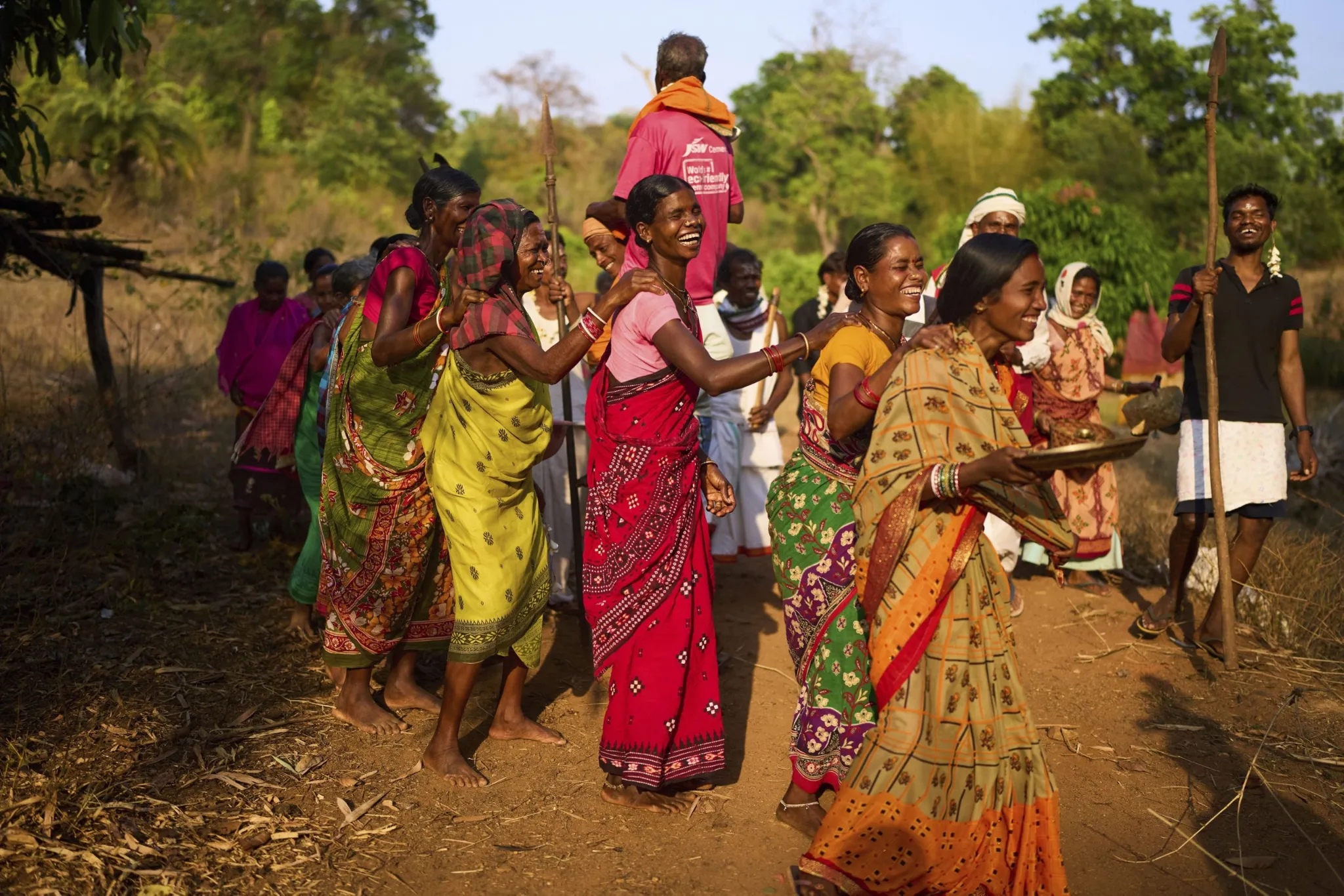
Adivasi societies already possess practices of mutual care that can inform more effective prevention. In communities of Jharkhand, particularly among the Ho, Munda and Santhal, the tradition of Madait refers to voluntary help and collective support offered when someone is in difficulty. It reflects an understanding that certain challenges exceed what any single household can manage alone. This principle of shared responsibility offers a culturally grounded way to think about mental health support.
Similarly, community meetings such as Dukhu-Sukhu Baithaki create spaces where people experiencing difficulties and their families can gather, share experiences and support one another. These gatherings normalise conversation around hardship and reduce isolation. Rather than importing external models wholesale, prevention efforts can strengthen and adapt such existing practices.
Locally organised youth spaces also hold promise. When young people have opportunities to speak in their own language, learn from peers and elders, and explore what Adivasiyat—identity, history, relationships and belonging—means to them, they gain resources that clinical settings alone cannot provide. Mentorship from within the community helps bridge generational knowledge and reduces the sense of navigating change in isolation.
Shifting the Central Question
Meaningful suicide prevention asks different questions. Instead of focusing only on what is wrong with the individual, it examines where community support exists and whether systems understand the people they aim to serve. Education that disconnects young people from their roots, development that brings displacement without cultural continuity, and mental healthcare that does not listen in the languages of those it seeks to help are no longer adequate.
Prevention must move from doing things for Adivasi communities to working with them. This means involving community members in the design, delivery and leadership of support systems. It requires recognising that cultural continuity, language, kinship and collective care are protective factors, not optional additions to clinical protocols.
Building Responsive Systems
Practical steps include training health workers to recognise local expressions of distress, expanding community-based support networks, and creating safe spaces for intergenerational dialogue. Partnerships between formal health systems and community institutions can improve reach while respecting cultural frameworks. Strengthening livelihoods, reducing economic precarity and ensuring education that affirms identity also form part of a broader preventive environment.
Data and research must likewise become more sensitive to cultural context. Understanding how distress is experienced and described within specific communities helps design interventions that people will actually use. Community health volunteers, traditional support practices and peer networks can serve as bridges between formal services and everyday life.
Towards Collective Care
The path forward lies in recognising that suicide risk in Adivasi communities is shaped by both individual circumstances and collective conditions. When language, culture and community bonds are weakened, the capacity to absorb and respond to distress diminishes. Restoring and reinforcing those bonds is therefore not peripheral to prevention—it is central.
By drawing on traditions of mutual help, creating spaces for identity and belonging, and ensuring that mental health systems listen as much as they treat, it becomes possible to build responses that are both effective and respectful. Suicide prevention in Adivasi communities succeeds when it strengthens the very social and cultural resources that have long sustained people through difficulty. The work begins not by imposing external solutions, but by standing alongside communities and supporting the forms of care they already know how to practise.
Read more – grammarthink.com