Digital technologies are playing an expanding role in environmental sustainability. Artificial intelligence, the Internet of Things, advanced sensors, digital twins and data analytics help organisations monitor resources, optimise energy use, reduce waste and support cleaner production systems. These tools do not replace physical changes such as renewable energy deployment or efficiency upgrades, but they make those changes more precise, measurable and scalable.
Optimising Energy Systems with AI and IoT
Energy management benefits significantly from real-time data and intelligent control. IoT sensors collect information on consumption, equipment performance and environmental conditions. Artificial intelligence analyses this data to forecast demand, detect inefficiencies and adjust operations automatically.
In power systems, AI improves forecasting of solar and wind generation, helping grids integrate higher shares of variable renewable energy. Digital twins—virtual models of physical assets—enable operators to simulate scenarios, predict maintenance needs and test responses to disruptions without affecting live systems. Automated demand response programmes use these capabilities to shift or reduce electricity use during peak periods, lowering strain on the grid and associated emissions.
Industrial and commercial buildings apply similar approaches. Continuous fine-tuning of heating, cooling, lighting and equipment can deliver measurable energy savings. Manufacturing facilities that combine AI with connected sensors have demonstrated reductions in energy use and emissions through better process control and predictive maintenance.
Supporting Cleaner Agriculture and Resource Use
Precision agriculture illustrates how digital tools reduce environmental impact while maintaining productivity. Sensors, drones and AI analyse soil conditions, crop health and weather patterns. This information supports more targeted irrigation, fertiliser application and pest management. Results include lower water consumption and reduced chemical inputs without sacrificing yields.
Similar principles apply to water management more broadly. Monitoring systems track usage, detect leaks and guide conservation measures. In some industrial settings, high rates of wastewater recycling are achieved through better measurement and process control.
Monitoring and Protecting Ecosystems
Digital solutions strengthen environmental monitoring and response. AI systems analyse satellite imagery, sensor networks and acoustic data to detect deforestation risks, track changes in freshwater ecosystems and identify methane leaks from industrial or agricultural sources. Early detection allows faster intervention.
Wildlife monitoring projects use thermal cameras, microphones and machine learning to distinguish animals, people and vehicles, supporting anti-poaching efforts and biodiversity protection. Urban applications include tools that map tree canopy cover to help cities manage and expand green spaces. These capabilities improve the speed and accuracy of environmental decision-making.
Addressing the Footprint of Digital Infrastructure Itself
As digital systems expand, attention has turned to the energy and resource demands of data centres and computing. Operators are improving efficiency through better hardware design, liquid cooling, higher performance per watt and the use of renewable energy. Some facilities explore reusing waste heat or linking operations with carbon-removal technologies. Companies track and report emissions avoided through efficiency measures and clean power procurement.
Software approaches also matter. Techniques that reduce the size or complexity of AI models, use shorter prompts or select appropriately scaled models for specific tasks can lower energy consumption during training and inference. Circular approaches to hardware—extending device life, improving recycling and using lower-impact materials—further reduce the environmental cost of digital systems.
Enabling Sustainable Materials and Processes
Digital tools support the development and deployment of lower-impact materials and production methods. Precision fermentation uses engineered microbes to produce proteins and other compounds with substantially lower greenhouse gas emissions, water use and land requirements compared with traditional livestock systems. Cleaner methods for producing ammonia, a key fertiliser ingredient, rely on renewable energy and benefit from process optimisation enabled by data and modelling.
Advanced battery chemistries that reduce reliance on scarce or environmentally intensive materials, along with improved recycling systems, are advancing with the help of digital design and monitoring tools. Construction materials research includes formulations that incorporate recycled content or capture carbon.
Measuring Progress and Driving Accountability
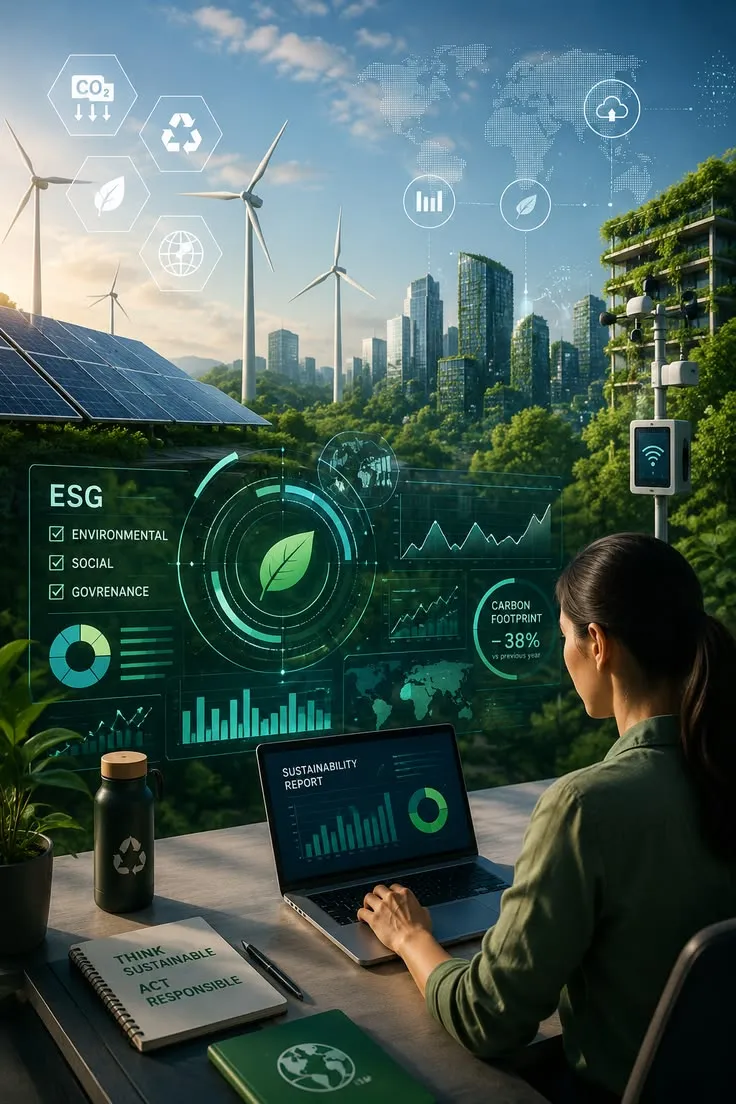
A critical contribution of digital solutions is better measurement. Platforms that calculate carbon footprints, track resource use across supply chains and model different scenarios help organisations set targets, identify priorities and report progress. Transparent data supports both internal improvement and external accountability.
Challenges and Balanced Approach
Digital technologies consume energy and resources of their own. Scaling AI and data centres increases electricity demand, making efficiency and clean power essential. Interoperability, data privacy, cybersecurity and equitable access remain important considerations, particularly in regions with limited infrastructure.
The most effective applications combine digital tools with physical changes—renewable generation, efficient equipment, better design and circular practices. Technology amplifies the impact of these measures by enabling precision, prediction and continuous improvement.
Green technology innovations show that digital solutions can support sustainability across energy systems, agriculture, industry, ecosystems and infrastructure. By improving efficiency, enabling better monitoring and guiding cleaner processes, these tools help organisations and societies reduce environmental impact while meeting practical needs. Continued progress depends on pairing technological capability with clear goals, measurement and responsible deployment.
Read more – Hairstylespark.com