Quiet luxury fashion prioritizes understated elegance over visible branding or fleeting trends. It centers on high-quality materials, refined craftsmanship, and timeless silhouettes that convey sophistication through subtlety rather than display. The approach favors pieces that feel expensive up close yet remain restrained from a distance, allowing the wearer to appear polished without announcing the cost of their clothing.
This style rewards intentionality. By selecting fewer, better items that mix seamlessly, anyone can achieve a cohesive, elegant wardrobe that works across seasons and occasions. The focus stays on fabric, fit, and thoughtful combination rather than volume or novelty.
Understanding the Quiet Luxury Aesthetic
Quiet luxury rests on several consistent principles. Clothing features clean lines and minimal ornamentation. Colors remain muted and versatile—think ivory, camel, charcoal, navy, black, cream, and soft earth tones. Fabrics take priority: cashmere, fine wool, silk, linen, and high-quality cotton deliver the hand-feel and drape that elevate even the simplest shapes.
Logos and heavy hardware stay absent or highly discreet. The overall impression relies on proportion, texture, and impeccable condition. A well-cut blazer or perfectly draping knit communicates more than any monogram ever could. The aesthetic also values longevity. Pieces are chosen to be worn repeatedly and to improve with time rather than to capture a single season’s attention.
Stylists who work with this look often emphasize subtraction. Adding too many accessories or competing details dilutes the effect. One strong focal point, whether a structured coat or a refined bag, usually proves more effective than layering multiple statements.
Building a Foundation with Minimal Pieces
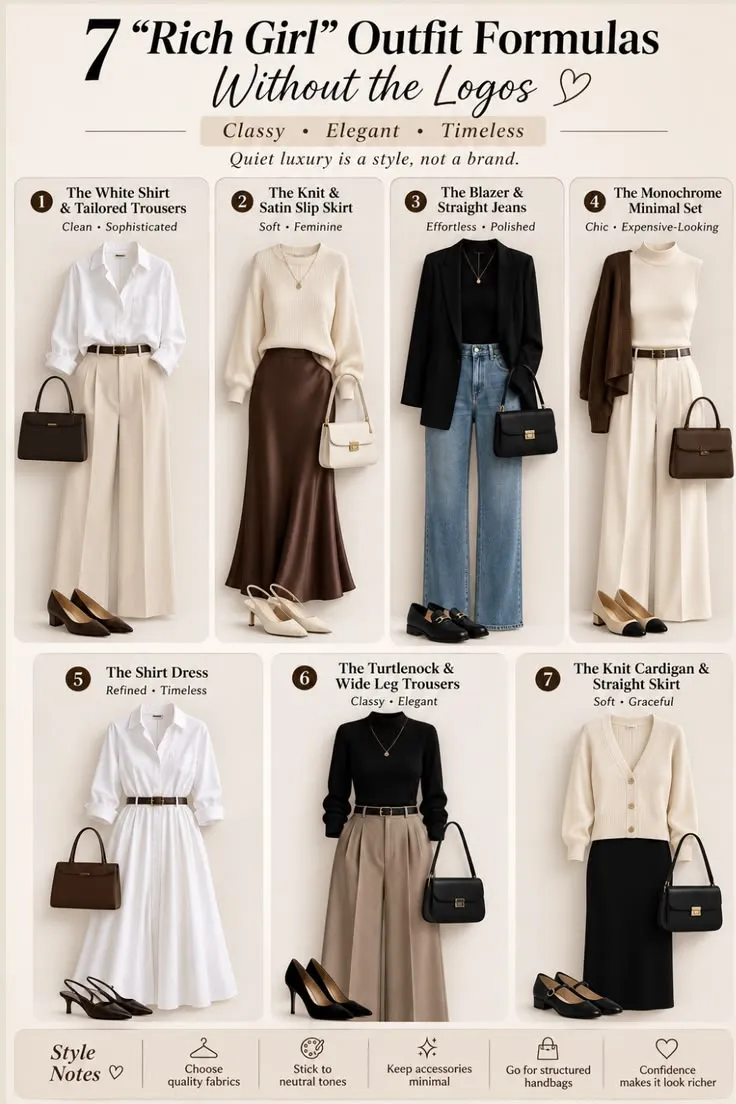
Creating an elegant look begins with a small group of versatile staples. Aim for items that share a cohesive color story and complementary silhouettes so nearly everything pairs with everything else. Start with these core categories:
A tailored blazer or structured jacket provides instant polish. Choose a neutral shade with clean shoulders and a length that suits your proportions. The jacket should layer easily over knits or shirts without bulk.
A trench coat or long wool coat serves as the primary outer layer. Its structure elevates casual pieces underneath and remains functional across temperatures.
A crisp white or soft neutral shirt offers endless pairing options. Look for a fabric with enough weight to hold its shape and a cut that allows both tucked and untucked wear.
Well-fitted trousers form the backbone of many outfits. Straight-leg or gently wide styles in wool, heavy cotton, or a quality blend create a refined line. Dark denim in a clean wash can also fill this role when kept free of distressing.
A fine-gauge cashmere or merino knit in a neutral tone supplies softness and warmth. Crew or V-neck styles work particularly well for layering or standalone wear.
A simple tank or premium T-shirt in a substantial fabric acts as a reliable base. Quality here matters more than branding; the garment should feel substantial and maintain its shape.
Logo-free leather bag and minimalist shoes complete the foundation. A structured tote or soft hobo in neutral leather pairs with nearly everything. For footwear, classic loafers, sleek flats, or low-profile polished sneakers keep the focus on the clothing rather than competing with it.
These pieces—roughly eight to twelve items—generate dozens of combinations. The key is consistency of color and quality so that mixing never feels forced.
Styling Principles for Everyday Elegance
Once the core pieces are in place, styling becomes a matter of restraint and attention to detail. Prioritize fit above all. Even the best fabric looks ordinary when the shoulders sag or the hem hits at an awkward length. Minor tailoring adjustments to trousers or a jacket often transform a good piece into a great one.
Layer with intention. A fine knit under an open shirt or a blazer over a tank creates depth without clutter. Keep the layers tonal or closely related in color so the eye moves smoothly across the outfit.
Accessories should enhance rather than dominate. A single pair of refined earrings, a slim belt with understated hardware, or a simple watch usually suffices. When the clothing is already strong, excess jewelry or oversized bags can overwhelm the composition. Subtract first; add only what serves a clear purpose.
Texture provides quiet interest. Pair a smooth silk shirt with wool trousers, or a nubby knit with fluid wide-leg pants. These contrasts keep minimal outfits from appearing flat while remaining harmonious.
Condition matters as much as selection. Steamed or pressed garments, clean shoes, and well-maintained leather signal care and elevate the entire presentation. A wrinkled shirt or scuffed loafer undercuts the refined impression the style aims for.
Practical Ways to Assemble Polished Looks
With the foundation established, everyday combinations become straightforward. A white shirt tucked into tailored trousers, finished with a blazer and loafers, works for professional settings. Swap the blazer for a trench and add a soft knit for cooler days.
For more relaxed moments, a quality tank or T-shirt under an open shirt, paired with straight-leg denim and polished flats, delivers ease without sacrificing polish. A cashmere sweater with wide trousers and a structured bag creates an elevated casual look suitable for many daytime occasions.
Evening or more formal contexts benefit from simpler silhouettes in richer textures. A fluid silk blouse with tailored pants or a clean column dress in a neutral tone maintains the quiet approach while feeling appropriate for special events.
The same limited wardrobe supports these shifts because the pieces share a common language of color, quality, and proportion. Rotation becomes easy, and the need for constant new purchases diminishes.
Making the Approach Sustainable and Personal
Quiet luxury rewards patience and observation. Evaluate existing pieces for fabric quality and fit before acquiring new ones. A few carefully chosen upgrades often improve the entire closet more than multiple mid-level additions. When shopping, prioritize natural fibers, clean construction, and silhouettes that flatter your body rather than following every seasonal variation.
The style also adapts to different budgets. High-street and contemporary labels offer well-cut neutrals and quality knits that approximate the look when selected with the same criteria of fabric and proportion. The determining factors remain cut, material, and how the pieces work together, not the presence of a particular label.
Over time the wardrobe develops a personal rhythm. Certain combinations become reliable favorites while still allowing small variations through accessories or layering. The result is an elegant presence that feels natural rather than constructed, built from minimal pieces chosen with care and worn with confidence.
This approach ultimately simplifies dressing while raising the standard of every outfit. By focusing on quality, restraint, and thoughtful combination, quiet luxury delivers lasting elegance without excess.
Read more – Suvicharsathi.com