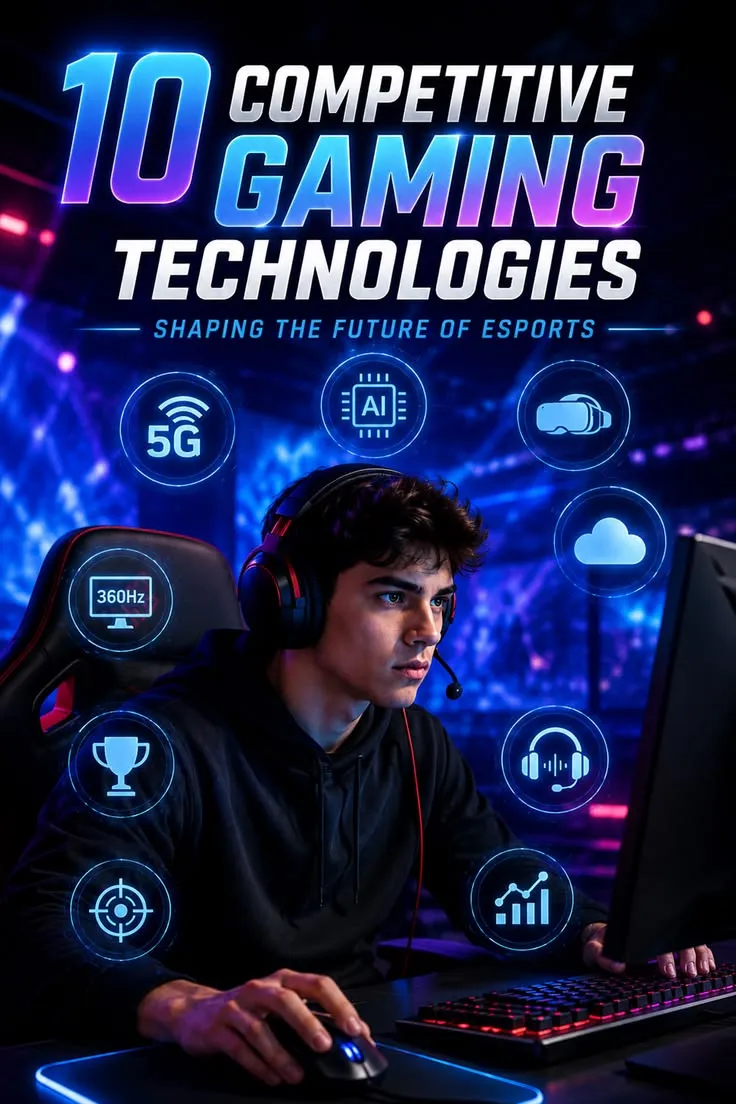
The global games market continues its steady expansion in 2026, with forecasts placing total revenue near 213.9 billion dollars, reflecting growth of about 6.1 percent year over year. Player numbers are projected to reach approximately 3.70 billion. Against this backdrop of overall expansion, several technologies are fundamentally reshaping how games are created, distributed, and experienced. Artificial intelligence, cloud streaming, immersive hardware, and platform convergence stand out as the primary forces transforming the industry.
Artificial Intelligence Reshapes Development and Gameplay
Artificial intelligence has moved from experimental tool to essential component of game development and player experience. Studios increasingly apply generative AI for asset creation, dialogue generation, testing, localization, and world-building. This accelerates production pipelines and enables more dynamic content. In gameplay, AI powers adaptive difficulty systems that adjust in real time to player skill, procedural storytelling that generates unique narratives, and non-player characters capable of more natural, responsive interactions.
The technology also supports smarter opponents that learn from player behavior and companions that form deeper interactive relationships. As AI tools mature, they lower some technical barriers for creators while raising expectations for personalized, living game worlds that evolve with each session. The result is greater replayability and experiences that feel more responsive to individual players.
Cloud Gaming Expands Access and Challenges Hardware Models
Cloud gaming represents one of the most significant shifts in distribution and accessibility. By streaming games from remote servers, players can access high-end titles on a wide range of devices without requiring powerful local hardware. Improved internet infrastructure and reductions in latency have made the experience more practical for mainstream audiences.
Industry analysis projects substantial long-term growth for the segment, with forecasts indicating the cloud gaming market could reach tens of billions of dollars by the mid-2030s. Major platforms continue to invest heavily, with services recording hundreds of millions of hours of streamed play in recent periods. This model broadens the audience by reducing upfront hardware costs and supporting play across phones, tablets, televisions, and lower-powered computers. While dedicated consoles remain important, the trajectory points toward a more platform-agnostic future in which access matters more than specific devices.
Immersive Technologies and Mixed Reality Progress
Virtual reality, augmented reality, and mixed reality continue to advance, moving beyond novelty toward more practical and engaging applications. Lighter headsets, improved displays, and better haptic feedback enhance immersion. Shared virtual environments support cooperative and social play, while AR overlays digital elements onto the physical world for new forms of interaction.
These technologies expand possibilities for both entertainment and training simulations. Although adoption remains more specialized than traditional gaming, ongoing improvements in comfort, resolution, and content support gradual mainstream growth. Integration with AI further enriches these experiences by enabling more responsive and adaptive virtual worlds.
Platform Convergence and Cross-Device Play
Boundaries between console, PC, mobile, and cloud continue to blur. Players increasingly expect seamless experiences across devices, with progress, purchases, and multiplayer sessions carrying over. Subscription services and multi-game offerings reinforce this shift by providing libraries that travel with the user.
Mobile remains the largest platform by revenue, while console and PC sustain strong performance through premium titles and services. Handheld devices also gain attention as portable options that combine convenience with capable performance. The overall direction favors ecosystems that prioritize player convenience over platform exclusivity.
User-Generated Content and Live-Service Evolution
User-generated content and creator-driven experiences maintain strong momentum. Platforms that empower players to build and share worlds continue to attract large audiences and high engagement hours. Live-service models persist, though many established titles face challenges in sustaining growth, highlighting the need for ongoing innovation and fresh content.
AI tools are beginning to assist creators in generating assets and systems more efficiently, potentially accelerating the volume and variety of player-made experiences. This democratization of creation expands the range of available content while placing greater importance on discovery and quality curation.
Implications for the Industry and Players
These technological trends collectively lower barriers to entry, personalize experiences, and shift value toward services and accessibility. Developers benefit from faster production cycles and new creative possibilities, yet face pressure to deliver higher-quality, more adaptive content. Publishers and platform holders invest in infrastructure, AI capabilities, and cross-device ecosystems to capture expanding audiences.
For players, the result is greater choice in how and where they play, more responsive game worlds, and reduced dependence on expensive dedicated hardware. Challenges remain around latency in some regions, content quality amid increased volume, and ensuring that AI-driven systems enhance rather than diminish creative vision.
In 2026 the gaming industry stands at a point of meaningful transition. Artificial intelligence streamlines creation and deepens interactivity. Cloud streaming redefines access. Immersive technologies expand the sensory experience. Platform convergence unifies play across devices. Together these forces are transforming gaming from a hardware-centric activity into a more flexible, intelligent, and widely available form of entertainment. The companies and creators that effectively integrate these technologies while maintaining engaging core experiences are best positioned to thrive in the evolving landscape.
Read more – llookwhatmomfound.com