Kangana Ranaut continues to draw attention not only for her work in films and politics but also for her consistent choice of traditional Indian textiles. Recently, the actor and Member of Parliament shared a picture on her Instagram Stories wearing what she described as her first Meghalayan saree. The handcrafted piece, an Ahimsa silk creation from the Northeast, quickly became a talking point for its craftsmanship, natural dyes, and the quiet statement it makes about supporting regional artisans.
A New Addition to Her Handloom Collection
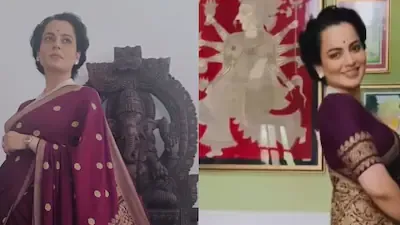
In the shared image, Kangana appears in a purple-hued saree that stands out for its subtle richness rather than overt embellishment. She captioned the post simply as “My first Meghalayan saree” and tagged the brand Taara Vedaa. The brand later confirmed details of the textile, noting that the saree is made from premium Meghalaya Eri silk, also known as Ahimsa silk. The fabric is durable and comes from the Philosamia ricini moth, which is primarily found in Northeast India. Unlike conventional silk production methods that involve harming the silkworm, Ahimsa or peace silk allows the moth to emerge naturally before the silk is harvested, aligning with principles of non-violence.
The colour of the saree was achieved through natural dyeing using iron dust and pomegranate. According to the brand, the entire piece took two and a half months to weave by hand. Taara Vedaa expressed pride at seeing Kangana wear the saree for one of her special events, describing every thread as carrying a story of patience, peace, and slow luxury. The combination of traditional technique, natural materials, and careful craftsmanship makes the piece a strong example of contemporary handloom work rooted in regional heritage.
Ahimsa Silk and Meghalaya’s Textile Tradition
Eri silk holds a special place in the textile culture of Northeast India, particularly in Meghalaya and neighbouring states. Known for its warmth, durability, and matte finish, it differs from the high sheen of mulberry silk while offering a distinctive texture that drapes beautifully. Because the production process does not require killing the silkworm, it has gained recognition among those who prefer ethical and sustainable options. The natural dyeing process used for Kangana’s saree further reduces reliance on synthetic chemicals, resulting in soft, earthy tones that age gracefully.
By choosing this particular weave for a public appearance, Kangana brings visibility to a craft that often receives less mainstream attention than more widely known silks from other parts of the country. The long weaving time underscores the labour-intensive nature of true handloom work and the value of supporting artisans who maintain these skills.
Handcrafted Sarees as a Signature of Her Public Life
Since entering politics as the Member of Parliament from Mandi, Kangana has frequently appeared in elegant handcrafted sarees drawn from different regions of India. Whether attending parliamentary sessions, public events, or film-related appearances, she regularly opts for handloom textiles that highlight India’s diverse weaving traditions. Her choices have included Kanjeevaram silks with intricate embroidery, Maheshwari weaves, Kotpad textiles from Odisha, Assamese handwoven pieces, and Himachali woolens, among others.
This consistent preference has become a recognisable part of her public image. Rather than relying on Western formalwear or heavily embellished designer pieces for official duties, she often turns to regional craftsmanship. The approach aligns with broader conversations around supporting local artisans, promoting “Vocal for Local” values, and keeping traditional skills economically viable. By wearing these textiles in high-visibility settings such as Parliament, she helps draw attention to the weavers and techniques behind each piece.
Style That Balances Tradition and Presence
Kangana’s saree choices tend to favour clean drapes, complementary blouses, and minimal yet thoughtful accessories. In the case of the Meghalayan Ahimsa silk saree, the focus remains on the fabric itself—its colour, texture, and the story of its making. This restrained styling allows the craftsmanship to remain central. Over time, her appearances have shown that handloom sarees can feel both formal enough for political and professional settings and elegant enough for cultural or promotional events.
Her wardrobe also reflects an interest in pieces that carry cultural meaning. Whether it is a weave linked to a specific community, a natural dye process, or a textile with a long history of ethical production, the selections often go beyond surface aesthetics. The Meghalayan saree fits this pattern by combining regional identity, sustainable practice, and refined design.
The Broader Impact of Celebrity Support for Handlooms
When public figures wear handcrafted textiles, the effect can extend beyond personal style. Artisans and small brands gain exposure, and conversations around slow fashion and heritage crafts reach wider audiences. Kangana’s decision to highlight her first Meghalayan Ahimsa silk saree on social media continues this pattern. By naming the origin and tagging the brand, she directs attention toward the makers and the specific tradition involved.
In an era when fast fashion dominates much of the market, the choice of a piece that required two and a half months of careful weaving stands as a reminder of the value of time, skill, and local materials. Eri silk’s association with non-violent production methods adds another layer of relevance for audiences interested in ethical clothing options.
A Continuing Commitment to Indian Textiles
Kangana Ranaut’s recent appearance in the handcrafted Meghalayan Ahimsa silk saree is consistent with the approach she has taken since stepping into public life beyond cinema. Elegant handloom pieces from across India have become a regular feature of her wardrobe for both parliamentary and other official engagements. The latest addition from Meghalaya expands that collection further into the Northeast’s distinctive silk traditions.
Through simple social media sharing and thoughtful selection of textiles, she keeps traditional crafts visible in contemporary contexts. The purple-hued, naturally dyed Eri silk saree represents more than a single outfit. It reflects patience in making, respect for regional materials, and an ongoing preference for clothing that carries cultural depth. As she continues to appear in such pieces, the focus remains on the quiet strength of handcrafted Indian textiles and the artisans who create them.
Read more – wisdomsuvichar.com